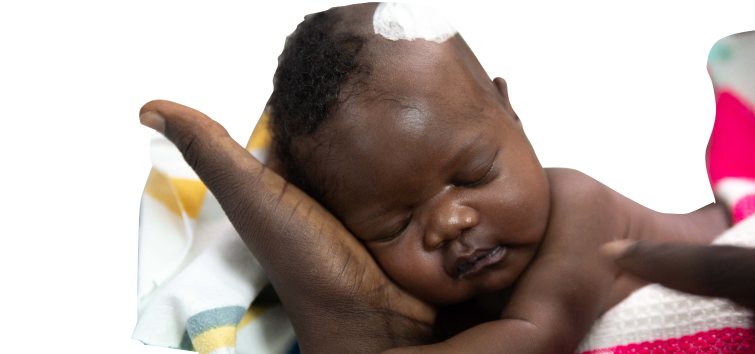
Gloria had already worked out the cost of the trip. The fare to the capital city. The days away from home. The money she did not have. Twelve hours on the road with a baby whose head kept growing. She was going anyway because doctors had told her that Festus needed a CT scan and that she would only find one in Kampala, the capital city.
Then a well-wisher in the community mentioned CURE Children’s Hospital of Uganda in Mbale.
“We searched everywhere for a CT scan to understand Festus’ condition, and just when we were preparing for a 12-hour journey to the capital city, we were instead directed to CURE,” Gloria says.
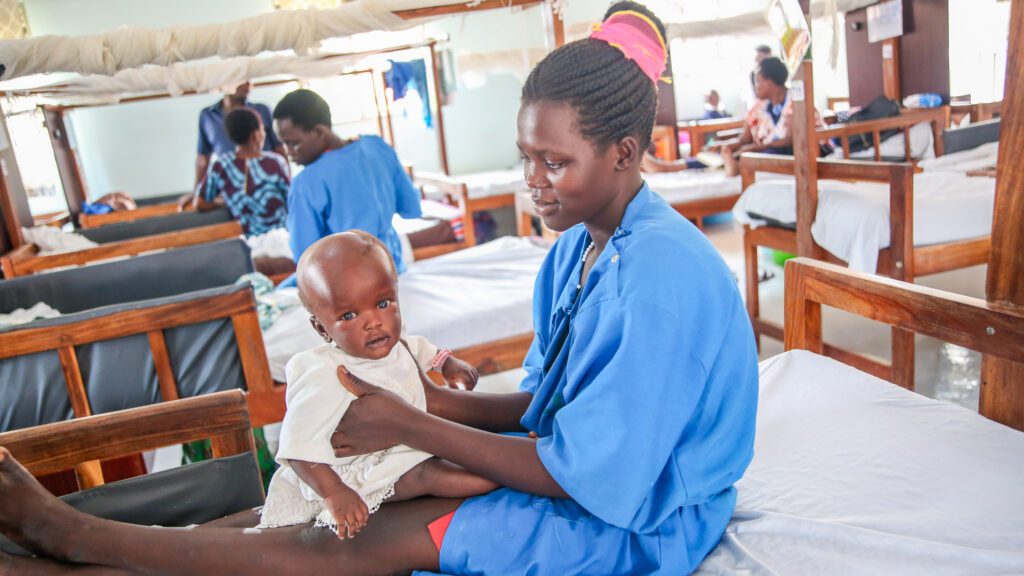
Festus was a few months old when his mother first noticed that his head was growing larger than it should have been. She did not have a name for what she was seeing. She only knew it was not normal and that it was getting worse.
So she started moving. One health facility, then another, then another. At each one, she told the story again. Eventually, a hospital in her community gave her something close to an answer: her son needed a CT scan before anyone could say what was wrong. But they did not have the machine. Neither did the next place she tried.
Time passed. Festus’ head kept growing. “We were told to travel to the capital city to find a CT scan,” she says. This is where many families in Uganda stop. Not because they stop loving their children, but because the road runs out of money before it runs out of distance.
What people say, and what is actually true
Long before a child like Festus gets a diagnosis, he collects explanations. In many of our communities, a baby whose head swells this way is said to be cursed. Neighbors whisper that someone bewitched the family. The mother is blamed for something she did during pregnancy, or for something she did not do. Some families are advised to keep the child hidden. Others are told plainly that nothing can be done, and are left to wait for the child to die at home.
None of that is true, and children die because of it.
Hydrocephalus is a buildup of cerebrospinal fluid inside the brain. That fluid is produced normally in every one of us, but when its pathway is blocked, or it is not absorbed, it collects and presses outward. In a baby, the bones of the skull have not yet fused, so the head expands under the pressure. There are medical reasons this happens – infection in the first weeks of life, bleeding, spina bifida, and conditions present from birth. There is no curse in it. It is not contagious. It is not punishment, and it is not the mother’s fault. Most importantly, it is treatable. Children treated in time sit, walk, play, talk, and go to school like any other child.
What actually damages these children is delay. Every month a family spends searching for a diagnosis, the pressure keeps working on the brain. Some of that damage surgery can reverse. Some of it, it cannot. This is why the lies are not harmless. They cost time, and time is the one thing a child with hydrocephalus does not have to spare.
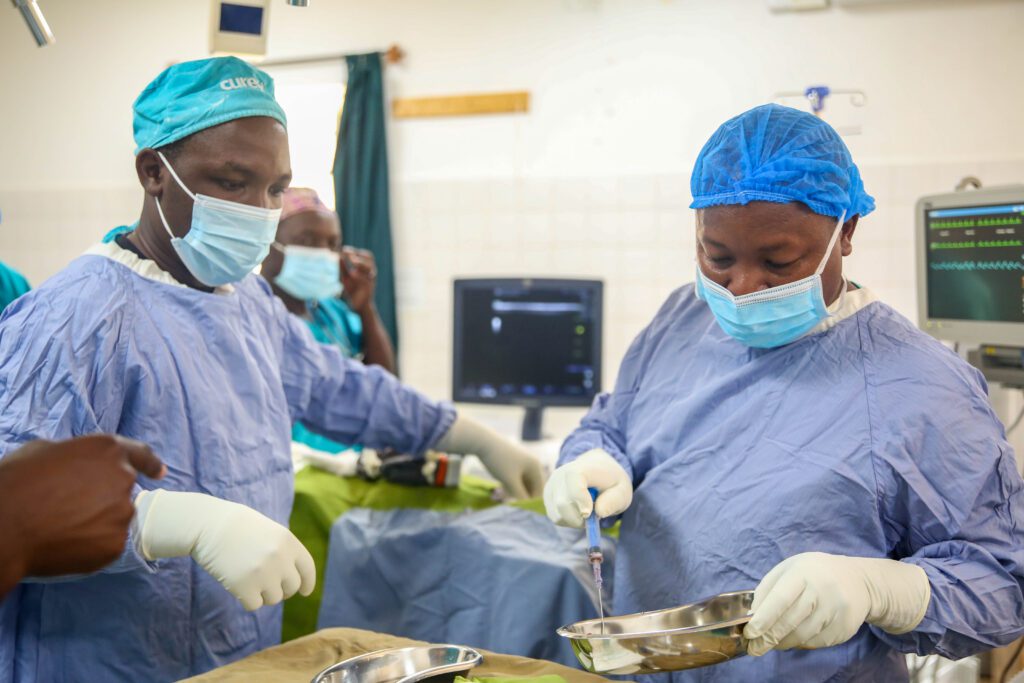
When Gloria reached Mbale City, she first went to a regional hospital. The doctors there listened to her story and referred her straight to CURE Children’s Hospital of Uganda. “We got a ride to the hospital, and we were welcomed well. The doctors did a CT scan and confirmed that Festus had water on the brain,” she says. The diagnosis was hard to hear and, at the same time, a relief. After months of guessing, Gloria finally knew what her son was living with – and she was told that it could be treated.
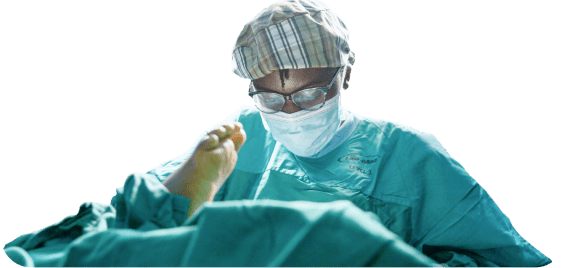
Festus underwent an Endoscopic Third Ventriculostomy with choroid plexus cauterization, or ETV+CPC. Our neurosurgeons use a small camera to create a tiny opening in the brain so the trapped fluid can drain and be absorbed as it should. It relieves the pressure without leaving a permanent tube inside the child’s body.
Gloria did not pay for that operation. Festus’ surgery was fully sponsored by friends of CURE who will never meet him, in a hospital his mother had not heard of two weeks earlier. That is not a small thing to sit with. A family from a village, out of options and out of money, walked into a theatre staffed by neurosurgeons and walked out with a treated child.
“I was so afraid for my child, but I trusted God and the doctors. When I saw him after surgery, I knew God had carried us through,” Gloria says.
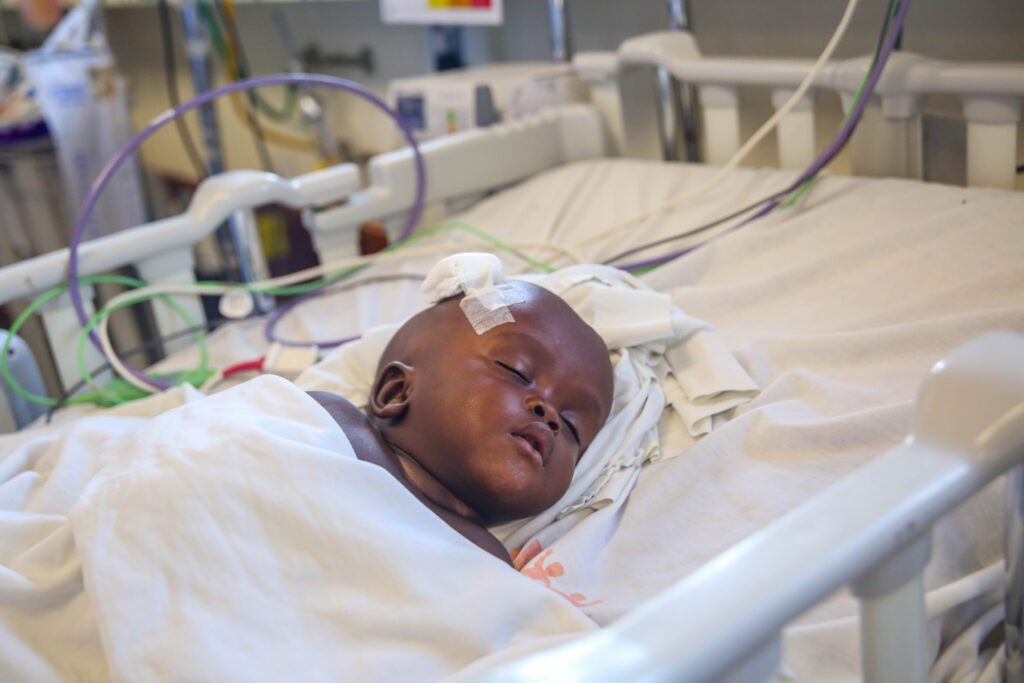
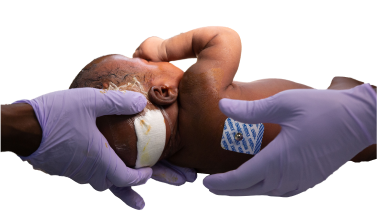
After theatre, Festus was moved to the ICU, where the team watched his vital signs and his recovery closely. For a mother, that room is frightening. “Seeing him in the ICU was not easy for me, but I kept praying and trusting God for his life,” Gloria recalls.
She was not left to carry those hours by herself. Pastor Immaculate sat with her and read Isaiah 41:10 with her: “Do not fear, for I am with you. Do not be dismayed, for I am your God.”
This is deliberate at CURE Uganda. The CURE Spiritual Ministry Department walks with caregivers from admission to discharge – explaining, praying, listening, and correcting the fears that families arrive carrying. Many mothers come believing their child’s condition is a judgment on them. Part of the healing offered is telling them the truth: God has not turned away from your child, this condition has a name, and it has a treatment.
Understanding removes shame. A mother who understands hydrocephalus stops hiding her baby, brings him back for review, and tells the next mother in her village where to go.
Festus recovered and moved from the ICU to the ward, gaining strength each day until he was discharged home with a follow-up plan. Before leaving, Gloria went to the hospital chapel. “I thank God for my child’s life and for answering my prayers,” she says. She held on to Psalm 41:3: “The Lord sustains them on their sickbed and restores them from their bed of illness.”
Six weeks later, in Northern Uganda
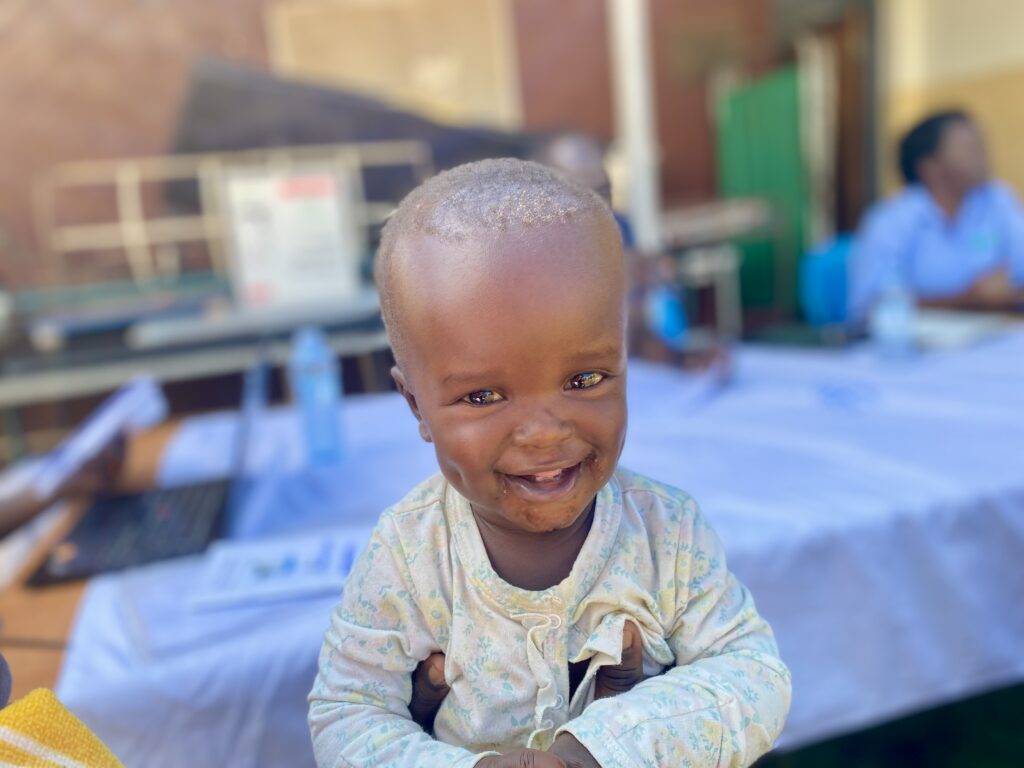
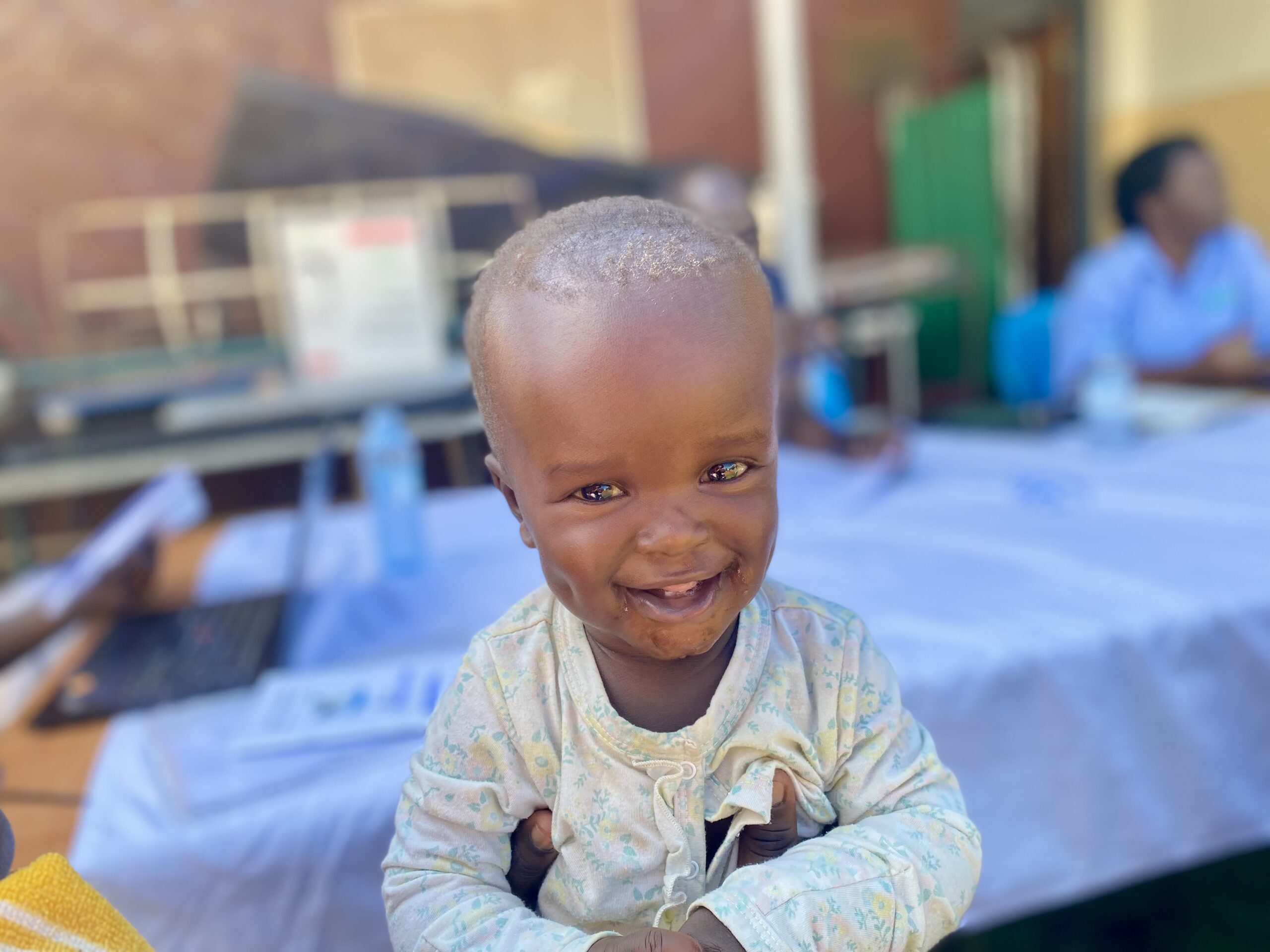
Festus came for his review at one of the CURE mobile clinics in Northern Uganda – much closer to home than Mbale, and a fraction of the transport cost. He was doing well. Alert, playful, no neurological deficits. He had reached the milestones our team looks for at his age: a social smile and sitting without support. The clinical impression was that the ETV was functioning.
He has since returned again for review, and the report remains encouraging. Those milestones deserve a moment. A social smile and sitting unsupported are ordinary things in an ordinary baby. In a baby whose brain was under pressure a few months ago, they are evidence that the surgery worked, that the referral came in time, and that the well-wisher who said “try Mbale” was part of something larger than a piece of advice.
Help is here, and it is available
We tell Festus’ story because there are other mothers still moving from facility to facility, still being told to travel long distances to Kampala, still being told their child is cursed.
If you know a child whose head is growing abnormally, a child born with a swelling on the back, or a child with seizures that will not stop, do not wait and do not listen to the whispers. Bring or refer them to CURE.
Festus is at home now, growing, being reviewed regularly, and being prayed for. His mother now knows what he was living with and what was done about it.
Please keep him in your prayers as he grows stronger. And thank you for standing with families like Gloria’s. Click here to donate and help more children like Festus heal.
About the CURE Children’s Hospital of Uganda
CURE Children’s Hospital of Uganda has been a place of hope since opening its doors in 2001. It is one of Africa’s leading pediatric hospitals for brain surgery and the treatment of neurological conditions. Our teaching hospital has an 18-bed Intensive Care Unit and 59 ward beds, three operating rooms, and an outpatient clinic. In addition to world-class medical care, our team ministers to the emotional and spiritual needs of our patients and their communities.