The nurses were scared when they saw Sam.
That was the first thing his mother, Esther, noticed. Not reassurance, not a plan, but fear on the faces of the people who were supposed to know what to do. “It made me feel like I had given birth to something unusual,” she said.
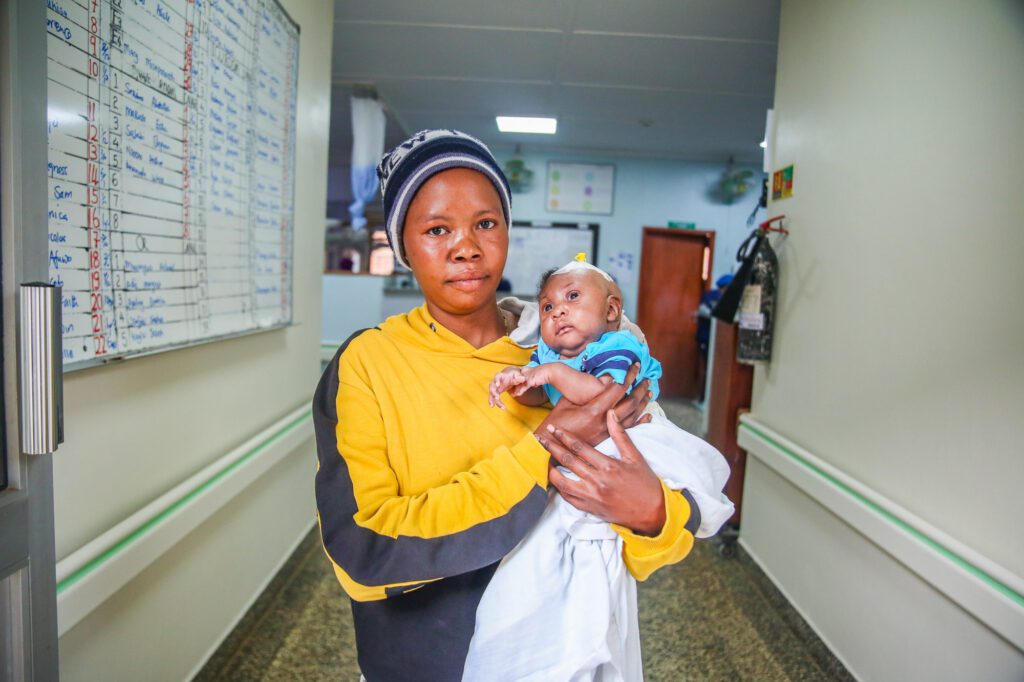
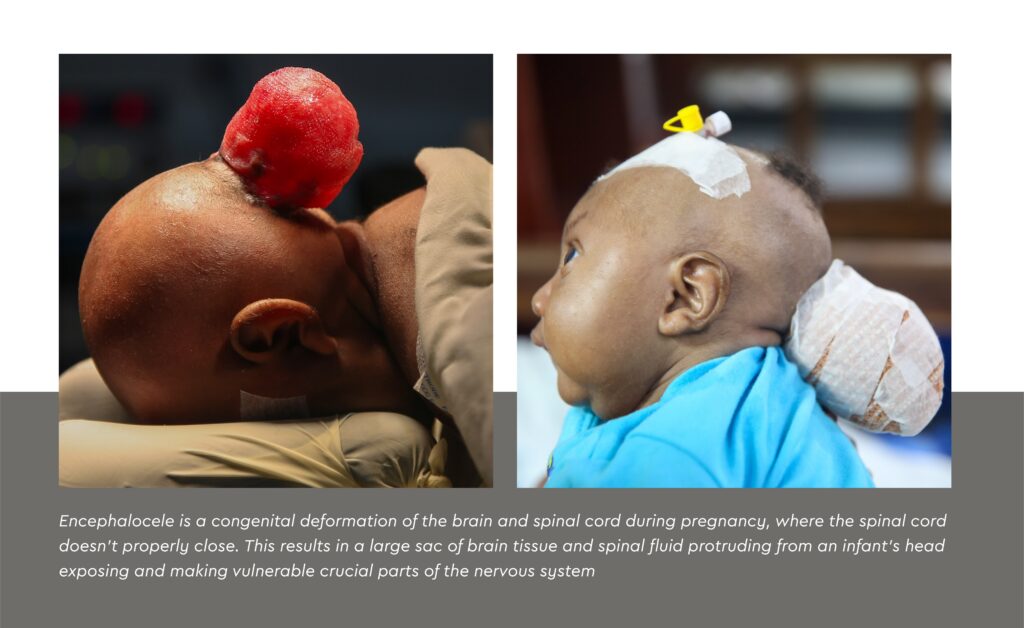
Sam was one month old and had entered the world carrying a condition no one in the room had ever seen. Encephalocele, a rare neural tube defect in which part of the brain protrudes outside the skull in a sac-like formation, had gone undetected through every prenatal visit Esther had faithfully attended. It announced itself only at the moment of delivery, when the midwives, alarmed by what they were seeing, asked Esther to stop pushing. They thought her uterus was coming out. They called for more nurses. No one knew how to help. The decision was made to perform an emergency C-section, and it was only in the operating theatre that the doctors understood what they were actually dealing with, a condition they had never encountered before.
Esther was referred onward and then referred again. She moved from one hospital to the next, each one asking for money she did not have, none of them offering answers she could hold onto. At one facility, a doctor asked for two million shillings to perform surgery.
“When I heard this,” Esther recalled, “I thought, let me take my baby home to die rather than stay in the hospital. We could not even afford a quarter of the amount.”
She had attended every prenatal appointment. She had done everything she was asked to do. And still, she was sitting in a hospital ward with a sick child, an empty pocket, and no road forward, holding a baby the world did not yet know how to help, and trying not to let her arms give out.
It was another mother who changed everything.
A woman in the same ward, whose own child had been treated at CURE Children’s Hospital of Uganda, looked at Sam and recognized something. She told Esther about a hospital in Mbale that specialized in exactly these kinds of conditions, where children like Sam were not unusual, where the surgeons had seen this before, and where care would not be withheld because a family could not pay.
“This was a relief,” Esther said. “I did not know what to say except to thank God.”
She came to CURE.
CURE Uganda was founded on one conviction: that when Jesus sent his followers out, he told them to heal the sick and proclaim the Kingdom of God — not one or the other, but both, together, as one mission. That is Luke 9:2. That is what has guided this hospital for 25 years.
In Mbale, that conviction has not stayed in a founding document. It has walked into theatres with the surgical team. It has sat with mothers through long nights on the ward. It has been spoken over children before they went under anesthesia, and celebrated with families when those children walked out healed. Twenty-five years. One mission. Still the same.
Esther arrived as one of those mothers.
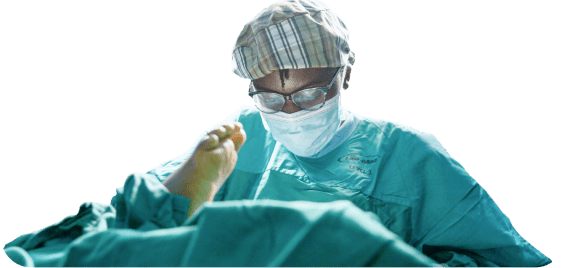
What she found was a team that knew what encephalocele was, that had the skill and the equipment to treat it, and that understood her fear not as an obstacle to manage but as a wound that also needed tending. Sam was assessed, prepared for surgery, and taken into the operating theatre, where surgeons carefully repaired the protruding sac, reconstructed the affected portion of his skull, and performed a cranioplasty to ensure his brain was protected and his skull stable.
He came through.
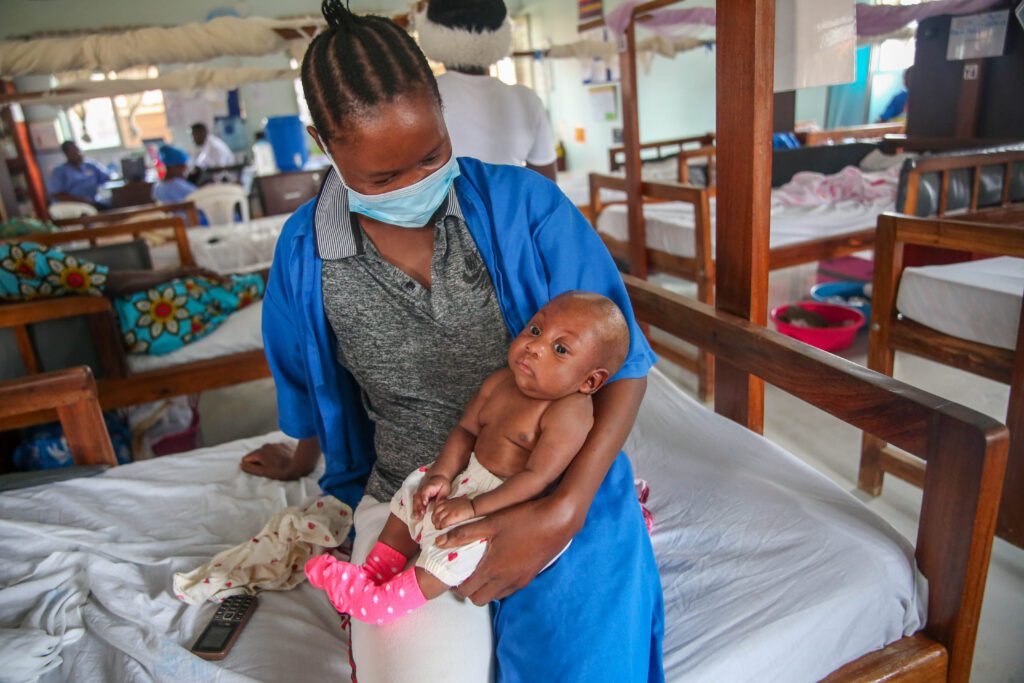
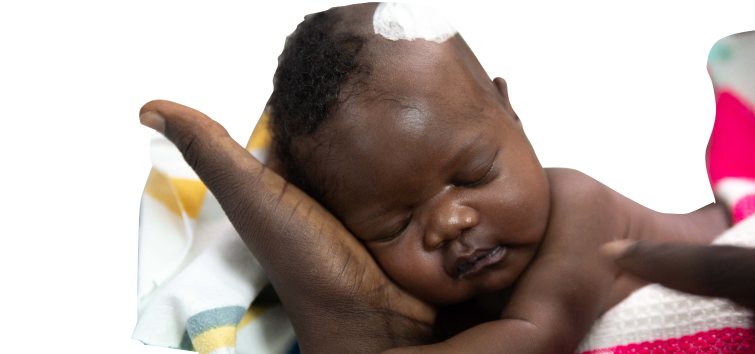
In the days that followed, Esther watched her son with the particular attention of a mother who had almost lost him. She noticed things. The way he turned his head. The way he settled. “He used to sleep on one side only,” she said softly, “but now he sleeps comfortably. I am so happy about this great change. My child will live and be happy too.”
For the first time since his birth, Sam looked like a child at rest.
The road after surgery was not a straight one.
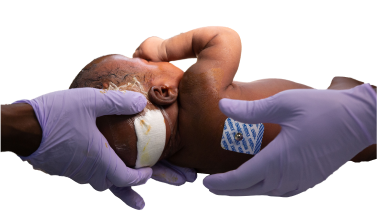
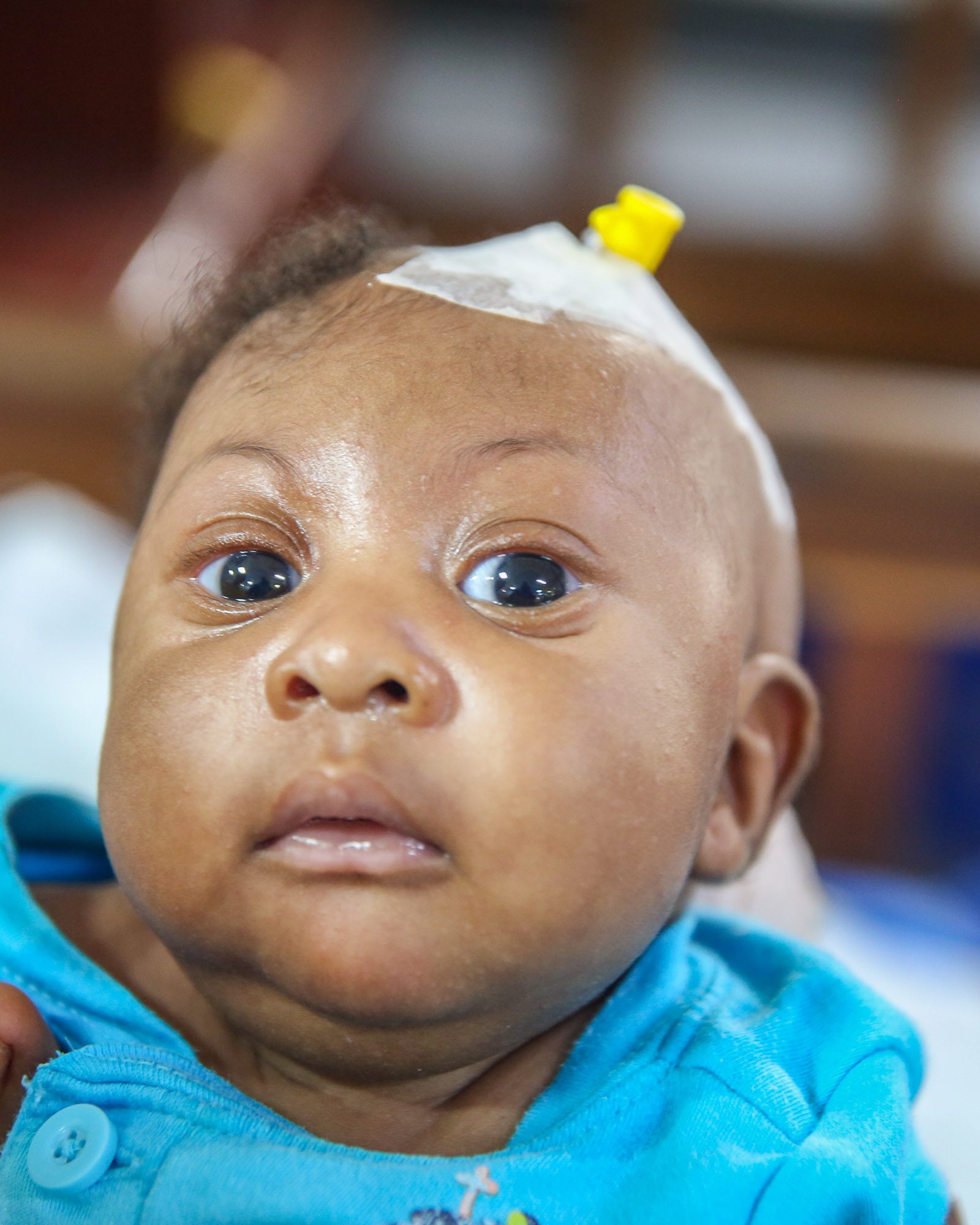
In the weeks that followed, Sam’s brain began accumulating fluid, a complication that required its own careful, staged response. He was moved to the Intensive Care Unit. Procedures followed: fluid spaces cleared, infection reduced, his small body monitored around the clock as the team prepared him, step by deliberate step, for the intervention that would offer more permanent relief. It was slow, exacting work, the kind that does not make for dramatic headlines but speaks quietly and clearly to what commitment actually looks like.
Esther did not leave.
She slept where she could, ate when someone thought to bring her something, and kept her eyes on her son. “The ICU was very hard for me as a mother,” she said. “But God has been faithful. Seeing my baby improve gives me strength. I am thankful for every step forward and for everyone helping my child get better.”
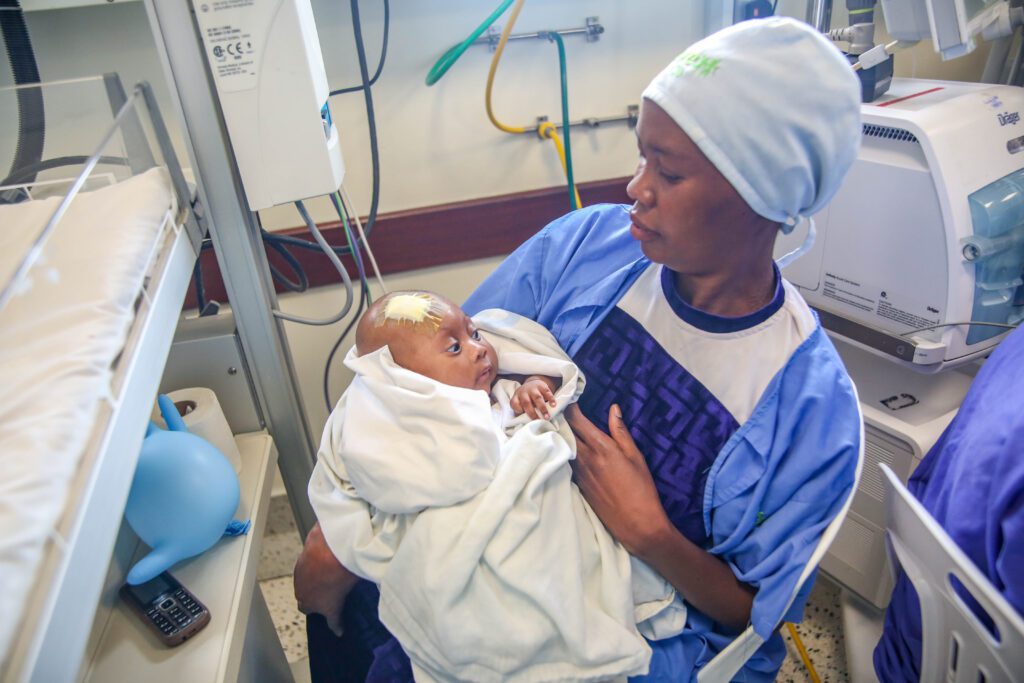
That faithfulness — hers, and the team’s that showed up alongside her every day — is not incidental to Sam’s story. It is the story.
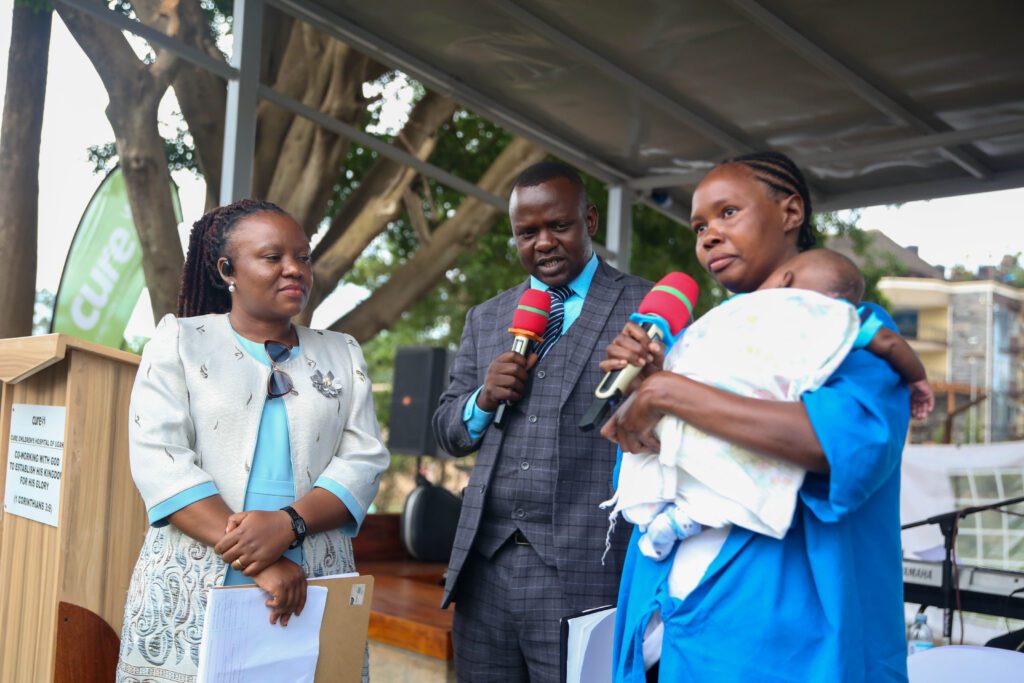
At CURE Uganda’s 25th anniversary celebration and the opening of its new surgical center, Esther, a mother who had carried her child to the edge of what she could bear, and found, at that edge, that she was not alone, was given a moment to speak.
She stood before the guests and said what she had been carrying since the day she arrived:
“When my child fell sick, I did not know where to turn. The journey has been long, and there were moments I feared I might lose him. But God opened a door for us here. Through the care we received and the kindness of people we have never met, my child has been given a chance to live. I will never forget what has been done for us.”
Nobody rushed to speak after she finished; it was the quiet of people who understood that they had just heard something true.
There are mothers across Uganda sitting right now in the same place Esther once sat. Frightened. Out of options. Holding a child, the world has not yet found a way to help, wondering whether the next door will also be closed.
CURE Uganda exists to be the door that opens.
CURE Uganda does not decide who deserves care based on what a family can produce at the door. That is not a policy. It is a conviction, one rooted in the example of Jesus who healed first and asked nothing in return. Twenty-five years in, it remains the reason this hospital exists.
For Sam, that love came in time.
Not every mother will have another mother sitting next to her who knows about CURE. Some will go home without answers because no one told them in time. Share this story — because the next person who reads it might be exactly the person who needed to.
If you know a child with a condition like Sam’s, please help their family find the care they need. CURE Children’s Hospital of Uganda provides specialized treatment at Plot 1–3 Bugwere Road, Mbale, and families can contact the hospital for referrals or medical inquiries at +2567677216055.
At CURE Uganda, no child is turned away because of their family’s financial status. You can also help make life-saving neurosurgeries possible for more vulnerable children across Uganda. To learn more or give a gift, visit CURE Uganda’s Donation Page.
About the CURE Children’s Hospital of Uganda
CURE Children’s Hospital of Uganda has been a place of hope since opening its doors in 2001. It is one of Africa’s leading pediatric hospitals for brain surgery and the treatment of neurological conditions. Our teaching hospital has an 18-bed Intensive Care Unit and 59 ward beds, three operating rooms, and an outpatient clinic. In addition to world-class medical care, our team ministers to the emotional and spiritual needs of our patients and their communities.