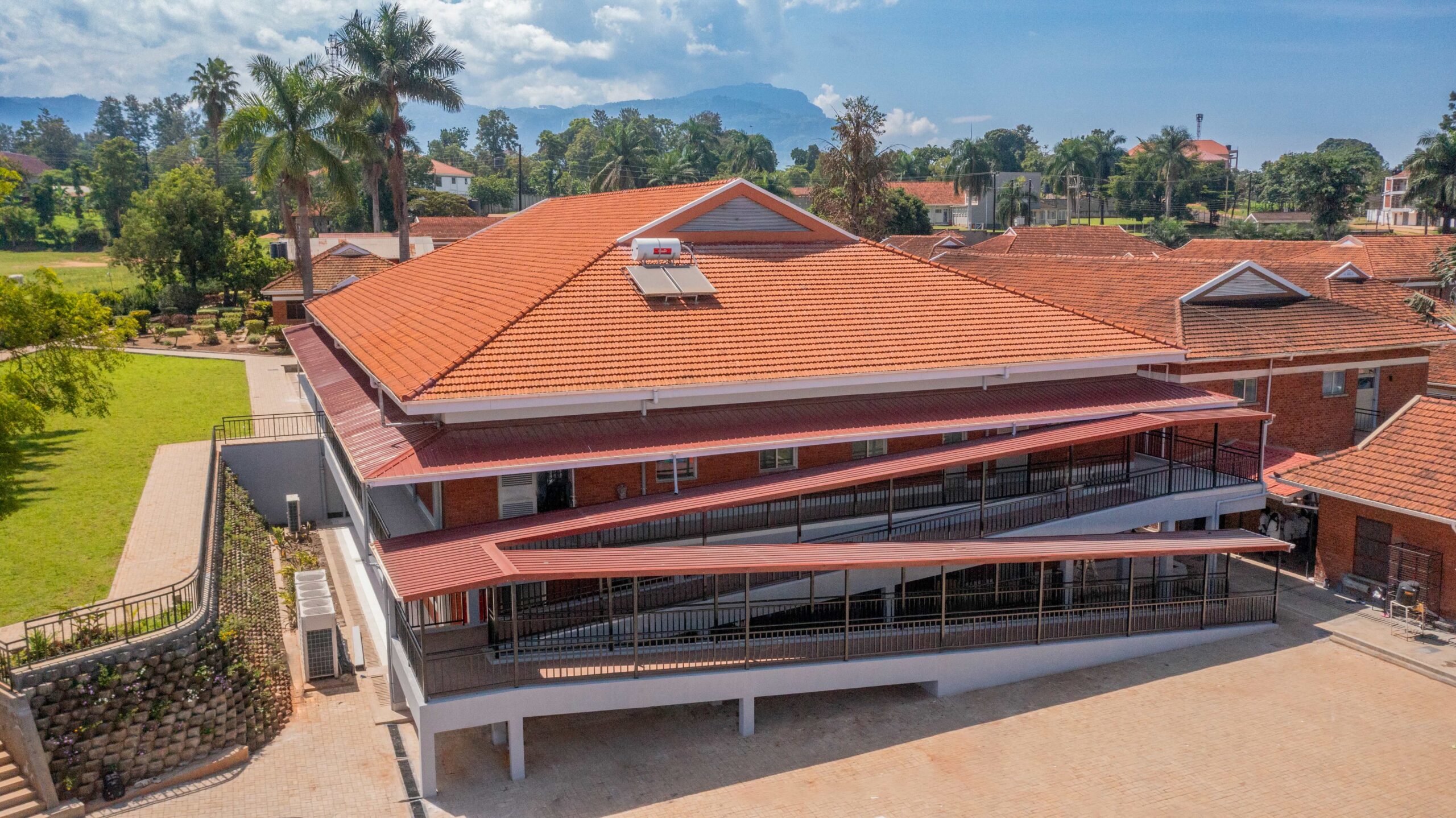
On April 15, 2026, CURE Children’s Hospital of Uganda celebrated 25 years of service — the only way it knows how: by expanding. The inauguration of a new, 13,300 ft² surgical center was not a ribbon-cutting ceremony in the ordinary sense. It was a declaration: more children will be reached, more families will be spared the long road of despair, and more stories like those already written within these walls will finally be told.
For a quarter century, CURE Uganda has stood as the last hope for families who have often exhausted every other option — families who have traveled from the furthest corners of the country, carrying children with conditions many hospitals do not treat and some communities do not understand. The new surgical theatre is built on that legacy. And it is built on stories like Esther’s.
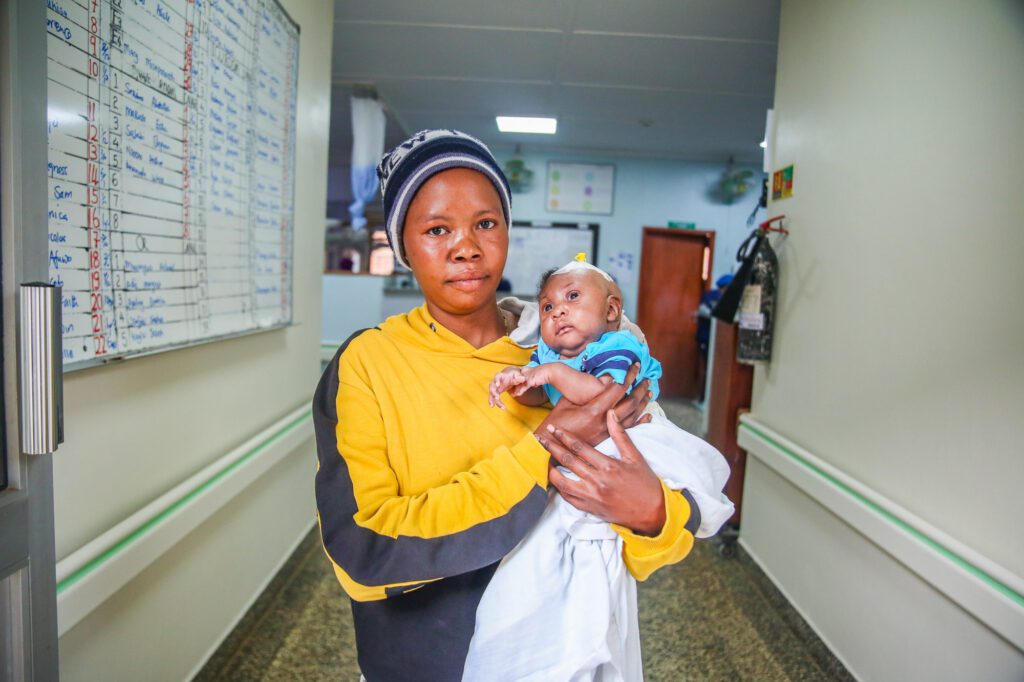
ESTHER’S STORY
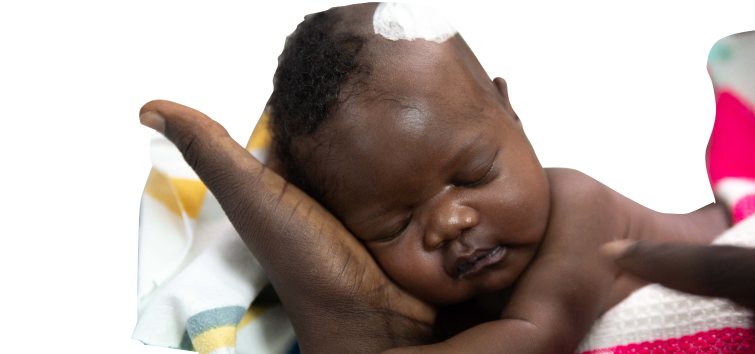
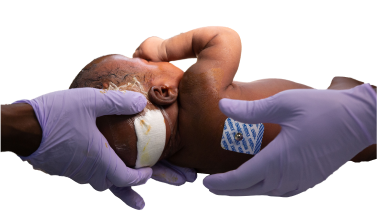
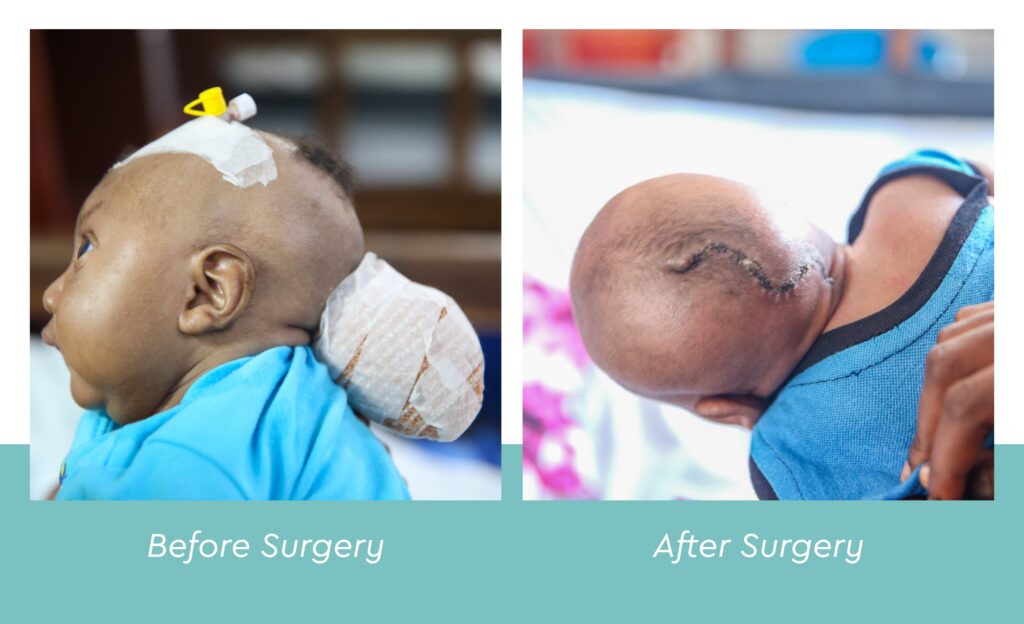
When Esther arrived at CURE Uganda, she was carrying Sam, her newborn son with encephalocele, a rare and frightening condition in which brain tissue protrudes outside the skull. She also carried a referral letter quoting a cost for surgery that was far beyond her reach. She had attended every antenatal visit. An ultrasound at nine months had flagged something about the baby’s neck, but nothing had prepared her for the delivery room, where midwives panicked, called for help, and rushed her into an emergency Cesarean section.
“When labor started, everything changed,” she recalls. “The midwives told me to stop pushing. They thought the uterus was coming out. They were so worried. They called other nurses, but no one understood what was happening.”
The referral journey that followed took Esther and her newborn from hospital to hospital before landing in Kampala, where the weight of the quoted surgery cost nearly crushed her entirely.
“When I heard that amount, I thought I should just take my baby home to die,” she says. “We did not even have a quarter of it.”
It was in that moment of despair that another mother, herself once a beneficiary of CURE Uganda’s care, told Esther about the hospital in Mbale. Her son, Sam, received the surgery he needed. He survived.
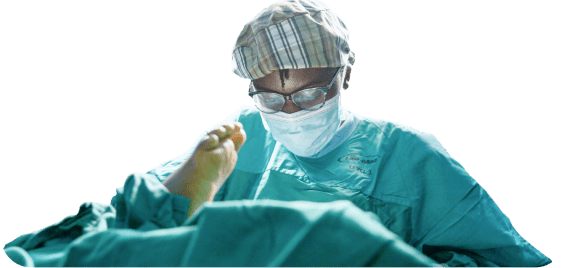
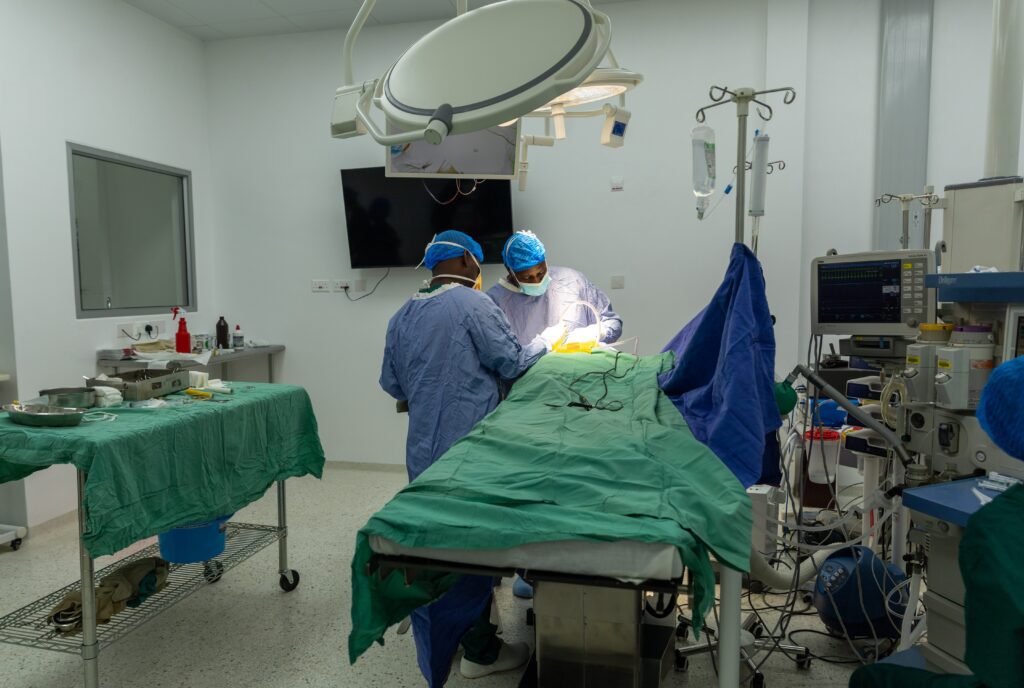
The new CURE Uganda Surgical Center is three times larger than the previous facility, adding the space and systems needed for more life-saving care. The brand-new 13,300 ft², two-story facility includes four operating rooms, five post-anesthesia care unit beds, expanded recovery areas, and state-of-the-art equipment. Its ground floor and basement house a biomedical workshop and equipment repair spaces, strengthening the hospital’s ability to safely and consistently care for children for years to come. A medical conference room was also created for the clinical team. This small detail drew warm laughter from the crowd, because those who had watched the hospital grow knew what it meant: a season when the pressure of patient numbers had consumed even the spaces meant for rest and learning.
Every square meter of the new building has been designed with one uncompromising intention: that every child who arrives at CURE Uganda, however far they have traveled and however long the odds against them, will receive the highest-quality surgical intervention available, not as a goal, but as a standard.
“The new operating theatre allows us to respond more effectively and reduce waiting times,” says Tim Erickson, CURE Uganda’s Executive Director. “Our goal is to ensure that every child who comes here receives timely, safe, and high-quality care.”
Dr. Emmanuel Wegoye, the hospital’s Medical Director and a pediatric neurosurgeon who has served CURE since 2008, frames the expansion in terms of responsibility. “We receive patients from all corners of the country — many after long journeys, often when families have exhausted all other options,” he says. “Our role is to set and maintain the highest standards of life-saving neurosurgical and medical care for all the patients we treat.”
“A mother cannot show up from Arua, from Kisoro, from Bundibugyo, and be told: no, we are full — go away. To date, we have not turned away any patient.”
That commitment to never turning a child away had, in earlier years, pressed the hospital to its limits. Patients were housed in the chapel. The conference room became a ward. The question was asked of Erickson and Wegoye: When do you say no? Their answer then is the same logic that drives the construction of the new center now. You do not say no. You build.
TWENTY-FIVE YEARS OF FAITHFULNESS
When CURE Children’s Hospital of Uganda opened its doors in Mbale in 2001, it performed roughly 500 surgeries a year with one neurosurgeon and two medical officers. Today, four full-time pediatric neurosurgeons lead a team of over 100 nurses and as many as 20 doctors, delivering around 2,200 life-saving surgical procedures each year. With a 33 percent increase in surgical capacity, the new surgical center is anticipated to help the hospital grow to more than 2,500 procedures annually in the next few years. Outpatient visits have grown by 66 percent since 2021 alone. Mobile clinics now extend the hospital’s reach to Lira, Gulu, Kampala, Iganga, Mbarara, Soroti, and Juba in South Sudan.
CURE Uganda’s leadership insists the real story lies beyond the statistics. It is found in the God who provided for the mission at every turn, and in the faithful men and women who showed up to do the work.
“Our hospital does not make sense,” Erickson said at the grand opening, with characteristic directness. “A center of excellence in neurosurgery, four and a half to five hours from the capital city, providing more brain surgeries than any other hospital in the world — this place should not exist. It exists only by the grace of God.”
And yet it does exist. For Esther, who nearly carried her son home to die, it exists. For the mother who arrives after days of travel, carrying children whose conditions have been met elsewhere with confusion, fear, or silence — it exists.
“For mothers often blamed, called cursed, and rejected because of their child’s condition, this place is an oasis of healing. That is just marvelous.”
Marvelous, because it should not be here. Marvelous because it is.
Those who have watched the hospital grow speak of it in terms that go beyond institutional pride. Dr. Patrick Bitature, Co-chairperson of the CURE Uganda Board, recalled the day he finally agreed, after more than a year of persuasion, to visit the hospital in Mbale. “In the first five minutes of walking around, I was asking the Lord to forgive me for taking so long to join this board,” he admitted. The work, he said, was unlike anything he had seen in his decades of business and philanthropy. “What happens within this compound is nothing short of a miracle — not just for Uganda, but by any global standard.”
Beyond medicine, the hospital has served as a place of spiritual transformation. Over its 25-year history, more than 31,000 people, patients, families, and community members have come to know Christ through CURE Uganda’s integrated spiritual ministry. It is a dimension of the work that its leadership considers inseparable from surgical outcomes. “The mission at CURE is to heal the sick and proclaim the Kingdom of God,” Dr. Wegoye told the gathered crowd. “I believe the heart of God for these children is reflected in his providence for this ministry. God cares about these children.” And it is precisely that conviction that this work is not merely humanitarian but sacred that has shaped the way CURE Uganda handles everything entrusted to it.
That culture of stewardship, stretching every shilling in service of the next child, has allowed CURE Uganda to grow from a modest surgical program into a world-leading center, without losing the intimacy and compassion that define its care. It is also what has made donors and partners willing to keep investing in the mission, decade after decade.
The new surgical center was made possible by a community of givers whose generosity spans continents. Life Outreach International, represented at the ceremony by Director of Mission John Yeatts, was among the lead sponsors. Patrick and Jenny Cameron from the United States provided critical funding that helped bring the building from vision to concrete reality. The Government of Uganda has walked alongside CURE in recent years in ways that Dr. Wegoye described as significant — and invited it to do more. More than 15,000 individual donors worldwide support the mission annually, ensuring that care is provided entirely based on medical need, never on financial capacity.
Justin Narducci, President and CEO of CURE International, spoke of the building itself as an expression of gratitude, a gift from the global CURE community to the men and women who show up in Mbale every day to do the work.
“This building is a gift. It is a tool. And it is a tool that is only useful in the right hands. Those hands are yours.”
“What happens here is not just healthcare — it is nation-building,” Bitature added. “When you restore a child’s health, you are giving a family stability and a future.” The Government of Uganda’s Commissioner for Clinical Services, Dr. Rony Bahatungire, agreed: “Conditions such as hydrocephalus and spina bifida require timely and highly specialized intervention, which is not widely available in many parts of the country. Facilities like CURE Uganda are helping to close that gap.”
A DOOR THAT WILL NOT CLOSE
Standing before the crowd as the afternoon drew to a close, Dr. Wegoye chose his words with the careful deliberateness of a man who has spent seventeen years operating on children’s brains and praying over their recoveries. “I stand here today not as a pediatric neurosurgeon, not as a medical director, but as a servant of God,” he said. “The purpose of my existence is to do the will of God. He says, “If you take care of the least of these, you take care of me.” And that is why we gather here today — to serve.”
Narducci painted a picture of what he believes lies ahead: a CURE Uganda where residency training happens on-site, where two fully dedicated pediatric wards serve the growing caseload, and where no child in Uganda is left without access to the care they need. “We get to be part of that future together,” he said. “That future starts today.”
That future is also the story of every child currently waiting for their Esther moment, the moment when despair turns into a referral, a referral into a surgery, and a surgery into a life reclaimed. The new theatre was built for exactly that moment. It was built by people who believe, with everything they have, that every child matters, and that with enough faithfulness, enough generosity, and enough grace, no child needs to be told to go home and wait.
Do you know a child suffering from a treatable neurological condition? CURE Children’s Hospital of Uganda is here to help. Click here to learn more about the conditions we treat.
About the CURE Children’s Hospital of Uganda
CURE Children’s Hospital of Uganda has been a place of hope since opening its doors in 2001. It is one of Africa’s leading pediatric hospitals for brain surgery and the treatment of neurological conditions. Our teaching hospital has an 18-bed Intensive Care Unit and 59 ward beds, three operating rooms, and an outpatient clinic. In addition to world-class medical care, our team ministers to the emotional and spiritual needs of our patients and their communities.